The health of your eyes is an invaluable asset, a fundamental pillar for the quality of daily life and the general well-being of every individual. In a rapidly expanding and technologically advanced reality like that of the United Arab Emirates, navigating through the various medical options can seem like a complex challenge, especially when looking for a professional capable of combining high-level academic competence with a human, empathetic approach deeply attentive to the individual needs of the patient.
Aziz Ophthalmology positions itself in this landscape as a reference point of excellence, offering targeted diagnostic and surgical services both in Dubai and Abu Dhabi. Relying on an expert ophthalmologist in Dubai and Abu Dhabi means embarking on a care path based on transparency, cutting-edge technologies, and solid international training, avoiding the pitfalls of approximate approaches or non-scientifically validated solutions that unfortunately proliferate online.
Why It Is Fundamental to Turn to a Vision Expert for Your Ocular Health
Many people tend to underestimate the small signals the eyes send, postponing check-ups or seeking quick online solutions to manage discomfort that could be, conversely, warning bells for more serious pathologies. A professional in eye health does not limit themselves to correcting blurry vision but analyzes the eye in its entirety, evaluating the state of internal structures such as the retina, the cornea, and the optic nerve. Undergoing periodic visits at a clinic that adopts a rigorous and methodical approach is the first step to prevent vision deterioration. It is necessary to understand that the eye is an extremely delicate organ; intervening with “do-it-yourself” methods or ignoring symptoms like light flashes, sudden drops in vision, or the appearance of shadows in the visual field can irreparably compromise ocular functionality. Clinical experience shows that early diagnosis is the most effective weapon to counteract chronic diseases or degenerative conditions.
Turning to someone who has dedicated their career to the study of ocular pathologies guarantees the patient access to the best therapeutic practices currently available globally. An in-depth diagnostic path should not be experienced as a moment of tension, but as an opportunity to clarify every doubt and define a personalized therapeutic strategy. Whether it involves refractive defects, retinal issues, or conditions requiring surgery, the open dialogue between patient and doctor is the element that makes the difference. Clarity in explanations and respect for realistic expectations represent, ultimately, the true measure of professionalism of those who care for your sight, allowing anyone to face treatment with maximum serenity and awareness.
How the Clinical Path Is Structured Within Aziz Ophthalmology
The model of care proposed by Aziz Ophthalmology stands out for a structure that places the comfort and safety of anyone who crosses the threshold of the studio between Dubai and Abu Dhabi at the center. The journey always begins with professional reception and the accurate collection of clinical history, indispensable elements to frame the general health profile. Subsequently, the procedure involves a preliminary analysis conducted by the optometry team a crucial phase that allows for the collection of essential biometric data even before meeting the doctor. This structured working method ensures that the time dedicated to the visit with Dr. Hassan Abdul Aziz is used with maximum effectiveness, focusing on the clinical interpretation of data and the planning of the potential therapeutic plan. It is not a simple assembly line, but a process where every single step has a specific diagnostic purpose.
The patient is guided through every phase, from the visualization of ocular anatomy via advanced imaging instruments to the detailed explanation of the images obtained. It is important to emphasize that technology plays a supporting role, but the doctor’s clinical eye remains the only true guarantor of the result. Operating in prominent hospital facilities in Dubai and Abu Dhabi allows for managing the entire spectrum of needs, from routine outpatient visits to complex surgeries, while always maintaining a direct and accessible communication line through modern channels like WhatsApp. This approach eliminates bureaucratic barriers and makes managing ocular health a fluid and reassuring experience, where clear communication and the absence of sensationalism are the distinctive marks of the medical practice offered.
Why Laser Refractive Surgery Requires Specific Attention
Correcting visual defects via laser is one of the most discussed and requested procedures, but not everyone is an ideal candidate. It is necessary to debunk the myth that this operation is suitable for just anyone indiscriminately; on the contrary, patient selection is the factor that determines long-term success. A serious professional does not promise miracles but carefully evaluates patient suitability through tomography and corneal topography tests—exams that allow for understanding if the ocular structure is capable of supporting remodeling. The safety of an intervention based on the latest generation laser is combined with a philosophy of prudence: if clinical conditions do not guarantee an optimal outcome, the intellectual honesty of the doctor must prevail.
The patient must be aware that the procedure, albeit quick and consolidated, remains a real surgical act that requires a recovery phase and rigorous follow-up. Often, the desire to free oneself definitively from glasses can lead to underestimating the risks related to a lack of preparation or superficial post-operative management. At Aziz Ophthalmology, attention to safety is paramount, and every aspect, from the choice of laser type to the management of the ocular surface, is cared for in every detail. The added value lies in proposing only what is really useful and safe for the patient, avoiding overtreatment. Vision is a delicate balance, and the task of a scrupulous doctor is to protect this balance through precise, almost tailored surgical planning that takes into account the unique biomechanical characteristics of every eye.
Can the Vision Decline Associated with Cataracts Be Prevented?
Cataracts represent a natural condition linked to the aging process, during which the crystalline lens loses its original transparency, gradually clouding vision. It is fundamental to clarify that, to date, there are no drugs or supplements capable of reversing or certainly preventing this phenomenon, which affects a vast portion of the population. However, modern cataract surgery has transformed an intervention once considered disabling into a quick, safe procedure capable of restoring visual quality sometimes superior to what the patient experienced in previous years. The secret to a happy outcome lies not only in the surgeon’s manual skill but in the careful choice of the intraocular lens to be implanted, which must be selected based on specific life needs, style of daily activities, and patient preferences.
Facing cataracts today means being able to count on technologies that allow for correcting, in addition to lens opacity, defects like presbyopia or astigmatism. The procedure takes place as day surgery, ensuring a rapid return to daily life, but it should not be considered a trivial act. Every eye is unique and requires a precise calculation of the artificial lens’s diopters. The availability of state-of-the-art surgical platforms allows the operation to be performed with micrometric precision, minimizing recovery times. The fixed point must be transparency: discussing with your surgeon the advantages and limitations of the different options, without falling into easy enthusiasm for unrealistic promises, is the most correct way to approach the resolution of this problem.
What Does Managing Complex Retinal Pathologies Entail?
The retina is the neurosensory tissue that lines the inside of the eye, and its integrity is essential for the transmission of visual stimuli to the brain. Pathologies involving this structure, such as macular degeneration, diabetic retinopathy, or retinal detachment, represent medical challenges that require specific competence and diagnostic tools of the highest level. Managing these cases requires an approach that knows how to combine diagnostic imaging, such as Optical Coherence Tomography (OCT), with the ability to intervene promptly both through laser treatments in the clinic and through vitreo-retinal surgery when necessary. The complexity of retinal pathologies requires that the patient be taken into care by a specialist who has matured specific experience, often culminated in international fellowships, just as in the case of Dr. Hassan Abdul Aziz.
Retinal conditions often present insidiously, without pain, making prevention and periodic checks the only effective defense strategies. When you notice a distortion of straight lines or a dark spot in the visual field, time becomes a determining factor. Offering treatments that include intravitreal injections performed with maximum sterility and comfort protocols, combined with the possibility of repairing retinal lesions quickly, is what defines a center of excellence. The patient should not feel alone when facing a diagnosis that can be frightening; the mission of a good professional is to explain in an accessible way what is happening and what the chances of success for the therapies are, maintaining a constant and reassuring dialogue at every stage of the journey.
Why the Choice of Diagnostic Technology Is a Differentiating Factor
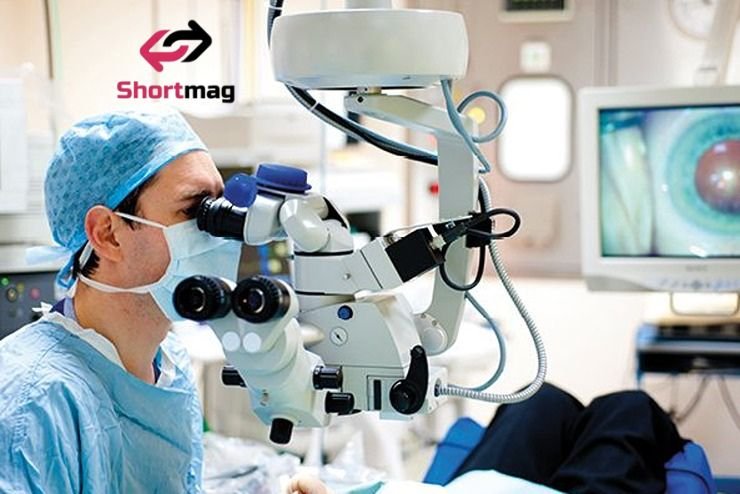
Patients often wonder why diagnostic technology is so central in an eye clinic. The answer lies in the extreme sensitivity of ocular tissues: an error of a few micrometers in planning a treatment or measuring a lens can drastically influence the final result. Instruments such as advanced corneal tomography or ocular biometry systems are not mere accessories, but fundamental extensions of the doctor’s analytical capacity. Constant investment in latest-generation instrumentation allows for creating a three-dimensional map of the eye, identifying anomalies that would be invisible during a traditional slit-lamp exam. In an advanced metropolis like Dubai, patients have the right to access technological standards that reflect the state of the art of global ophthalmology.
It is not just about possessing machinery, but about knowing how to correctly interpret the data they produce. True excellence lies in the synergy between the doctor’s academic experience and the precision of digital data. This combination allows for personalizing every single medical act, minimizing the margin of uncertainty. When a patient sits in front of an advanced diagnostic instrument, they must be aware that that moment is fundamental for the creation of their personalized “visual project.” Trust in the professional also derives from this certainty: the awareness that every clinical decision taken within Aziz Ophthalmology is based on objective evidence, precise measurements, and rigorous analysis that leaves no room for approximation.
What Are the Key Questions to Ask Before Starting a Therapy?
Many patients arrive for a visit with a load of legitimate doubts but often do not know how to ask the right questions. A proactive attitude is always advised. It is important to ask what the therapeutic alternatives are, what the real recovery times are, and what to expect post-operatively. It is fundamental to understand that every medical intervention entails risks, which a transparent professional will have no problem illustrating. Clarity is synonymous with respect for the patient. Those looking for a doctor capable of listening should feel free to investigate the surgeon’s training: knowing the academic background, international specialization experiences, and continuous dedication to scientific research is a right of the patient and a duty of the doctor.
Furthermore, it is advisable to openly discuss your visual expectations. Often, a patient desires a result that, for anatomical or biological reasons, might not be fully achievable; an honest professional will be able to manage these expectations, explaining honestly how far therapy can take you. Asking how follow-up will be managed and what the reference contacts are in case of need is another fundamental step to feel supported. The relationship between doctor and patient is a form of trust pact that is built precisely through this exchange of information. At Aziz Ophthalmology, time dedicated to informative conversation is considered an integral part of the therapy, as a well-informed patient is a patient who faces the care path with greater awareness and serenity.
The Importance of Relying on an Expert Ophthalmologist in Dubai and Abu Dhabi for a Clear Visual Future
In summary, managing ocular health requires a combination of high specialization, precision technologies, and a human approach that puts the patient at the center of the discussion. Aziz Ophthalmology represents a reference point where these components blend harmoniously, offering a concrete response to the needs of those who live in Dubai and Abu Dhabi. From correcting refractive defects to cataract surgery, up to managing complex retinal pathologies, the constant commitment is to guarantee excellent clinical outcomes in a comfortable and organized environment. Eye health is an investment in the future of one’s quality of life; therefore, the choice of the professional to entrust oneself to cannot be left to chance, but must be based on parameters of competence, transparency, and academic dedication. Turning to an expert allows for preventing complications, optimizing therapies, and maintaining sharp, healthy vision over time. Anyone wishing to explore their ocular situation or explore the most suitable solutions for their needs can find in Aziz Ophthalmology a dedicated partner, ready to listen and guide toward the best care path possible for their sight.